

Let me set aside my day job for a moment.
This isn’t a post from someone in the payment risk management space. This is from me as a patient. Someone who puts their trust in healthcare providers not just to care for my health, but to safeguard the sensitive information provided during that process.
That’s why what I recently encountered was so troubling.
A fairly large hospital network, one that, not too long ago, made headlines for being the victim of a major cybersecurity breach, offers patients the ability to make payments by phone. On the surface, that sounds convenient. But then I saw the actual instructions posted clearly on their website.
To make a payment, the hospital asks you to leave a voicemail with the following information:
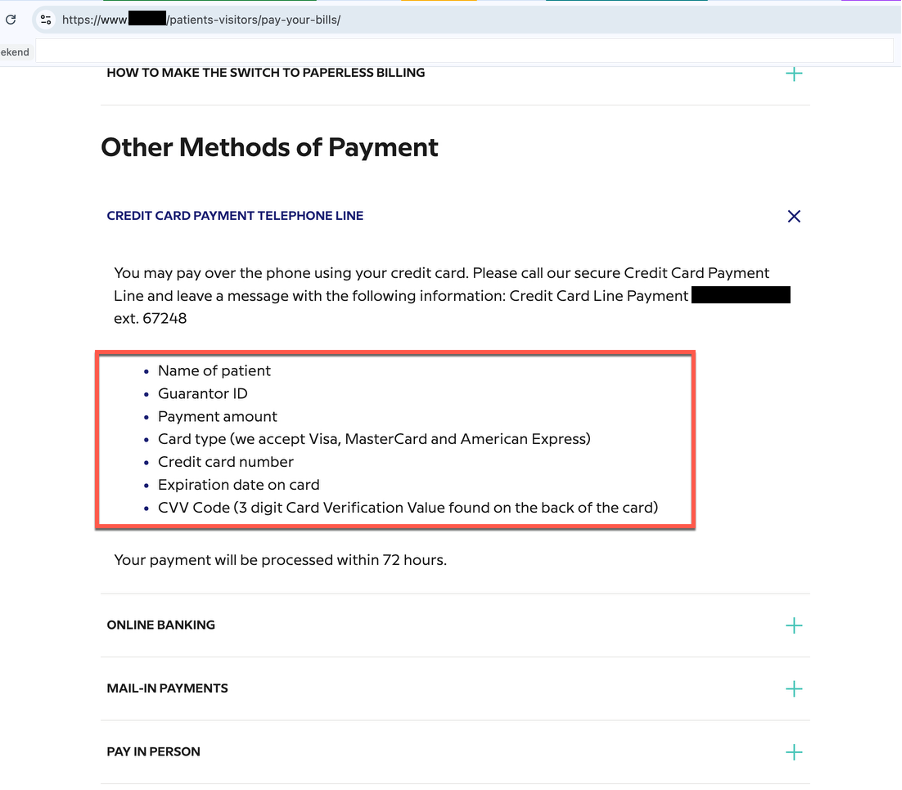
You don’t need to be in the cybersecurity or payment industry to know this is wildly irresponsible.
For most people, this would immediately raise red flags or cause them to hang up the phone altogether. But here’s the thing: some patients will follow these instructions. They’ll leave this highly sensitive information in a voicemail, assuming that the hospital knows what it’s doing and his looking out for them. That’s what makes this so troubling.
We don’t need to invoke industry jargon or throw around compliance acronyms like PCI DSS to recognize this is a problem. Before we even talk about regulations, we should talk about basic responsibility and common sense.
Healthcare organizations, especially those that have already experienced a security breach, should be leading by example. They should be training their teams, updating their processes, and implementing simple technologies that make it easy for patients to pay securely without putting them at risk.
And let’s be honest: it doesn’t take much. There are straightforward, affordable ways to collect payments by phone without ever exposing a patient’s credit card information to voicemail systems, untrained staff, or unsecured channels.
So, here’s my advice, patient to provider:
- Stop. Take a moment and ask: How are we actually collecting payment information from our patients?
- Review. Compare those practices against basic industry guidance (yes, the PCI Security Standards Council publishes them for free).
- Fix. Don’t wait for the next breach, or for patient trust to erode. Make the small changes that will make a big difference.
Be smart. Be safe. And your patients—and your organization—will thank you for it.
Struggling with PCI Compliance?
Where to Start with PCI Compliance? Identify Your PCI Scope! The first step you need to take before beginning your PCI compliance journey is determining your PCI Scope. Get started with your complimentary PCI Scope Wizard today! Click below to book a free session with an expert who will guide you through the process. This 15–30-minute session is designed to save you countless hours of frustration—sit back and let us handle the details!