

New Data Reveals What Actually Drives IVR Payment Adoption
Why Some IVR Payment Programs Stall, and How Others Accelerate. This Report Shows Why.
Organizations invest in IVR Payments to cut costs, reduce PCI scope, and improve customer experience.
But after launch, many still see customers calling staff to pay.
This report explains the real reasons behind stalled adoption and shows how leading organizations shifted from 98 percent agent-assisted payments to 3 percent, with IVR self-service rising from 2 percent to 100 percent in under 12 months.
Below you can find more details.
What You Will Learn
- The six adoption drivers that determine whether customers use self-service
- How routing, voice prompts, internal alignment, and communications change outcomes
- A dual-case study based on more than 10,000 pay-by-phone interactions
- Mistakes that block adoption
- Practical steps to increase IVR usage immediately
Why It Matters
Low adoption increases costs, expands PCI scope, and slows modernization.
High adoption reduces agent load, strengthens compliance, and improves customer experience.
This report provides the evidence-based approach leaders need to get the shift right.
Inside the Report
- Real-world data from a 13-month IVR Payment transition
- Call routing reviews and script audits
- Customer behavior patterns and adoption curves
- Strategic recommendations that work in every sector, including healthcare, utilities, services, and government
Who Should Download This
- Operations leaders
- Customer service leaders
- Digital transformation teams
- Finance and compliance teams
- IT and payment modernization leaders
Download Your Copy:
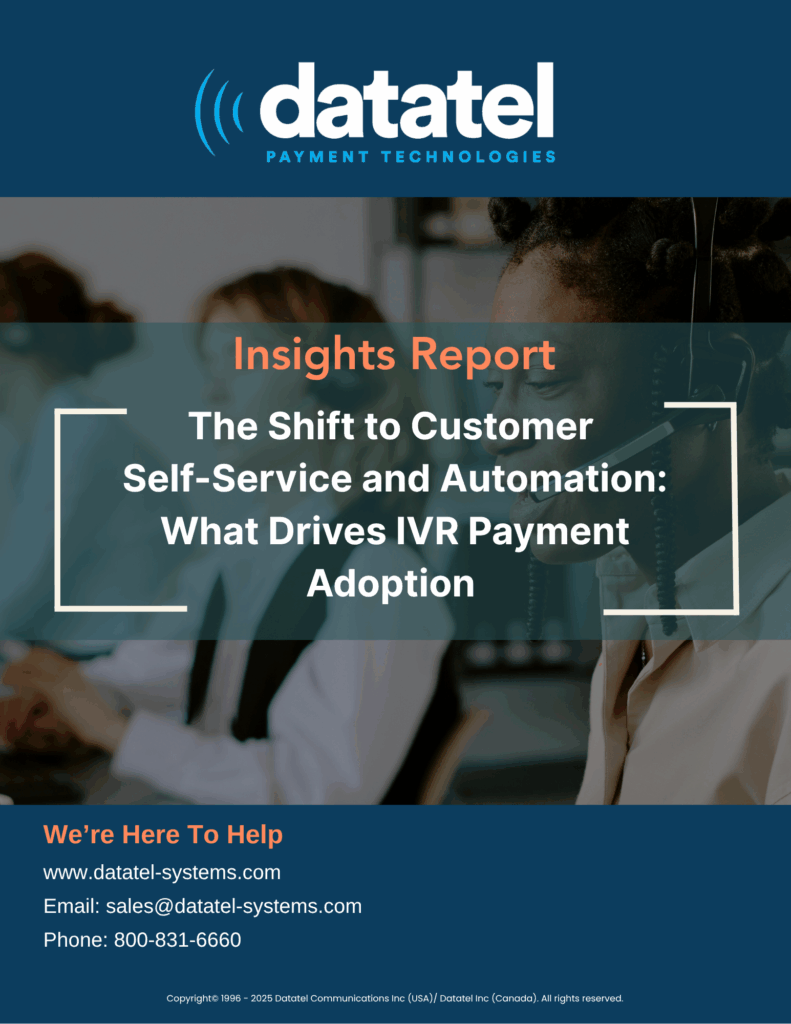
- The Shift to Self-Service & Automation: What Drives IVR Payment Adoption – Datatel Insights Report (PDF)
- Focus on what actually drives adoption.
- Use real data to modernize your payment experience.